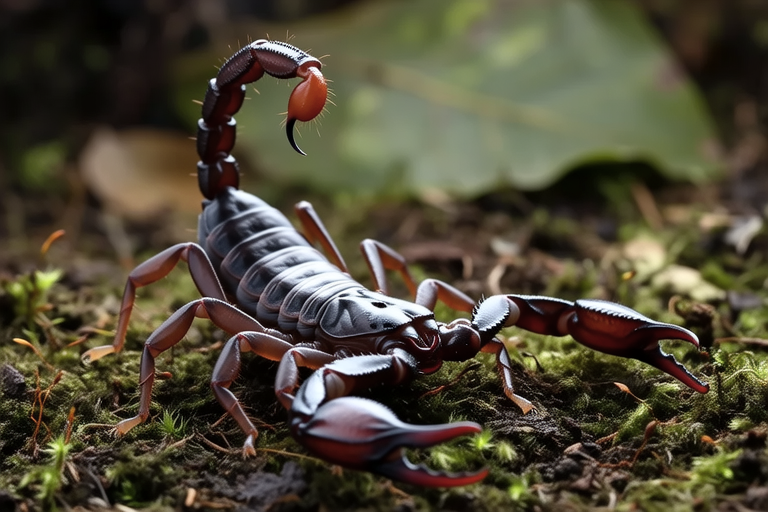
The Red-Clawed Marvel: Heterometrus Spinifer
Scorpions, often misunderstood and feared, are fascinating creatures that play crucial roles in various ecosystems. Among these, Heterometrus spinifer, commonly known as the red-clawed scorpion, stands out due to its striking red claws and unique characteristics. This article explores the biology, habitat, behavior, and conservation status of Heterometrus spinifer, highlighting its ecological significance and dispelling common myths.
Biology and Physical Characteristics
Heterometrus spinifer belongs to the family Scorpionidae and is found primarily in Southeast Asia, particularly in countries like Thailand, Malaysia, and Indonesia. It is one of the largest scorpion species, with adults reaching lengths of up to 10 centimeters. The most distinctive feature of this scorpion is its vivid red claws, which serve multiple purposes. These claws, or pedipalps, are used for capturing prey, defense, and sometimes even communication. The coloration of the claws can vary slightly depending on the individual’s age and health, but the bright red hue remains a hallmark of the species.
The body of Heterometrus spinifer is segmented into two main parts: the cephalothorax and the abdomen. The cephalothorax houses vital organs such as the heart and digestive system, while the abdomen contains venom glands and sensory structures. Like all scorpions, Heterometrus spinifer has eight legs and a tail-like structure called the metasoma, which terminates in a stinger. This stinger delivers venom, primarily composed of neurotoxins, that immobilizes prey and defends against predators. The venom’s potency varies among individuals, and while it can be painful to humans, it is rarely lethal.
Habitat and Distribution
Heterometrus spinifer thrives in tropical and subtropical environments, preferring humid forests and areas with dense vegetation. These scorpions are typically nocturnal, seeking refuge during the day under rocks, logs, or in crevices. They are adept at climbing and can be found in trees, where they may ambush insects and small vertebrates. Their preferred habitats include rainforests, mangroves, and coastal regions, where the combination of humidity and abundant prey makes survival easier.
In Thailand, for instance, Heterometrus spinifer can be found in national parks like Khao Yai and Erawan, where visitors have reported sightings. However, due to habitat destruction and human encroachment, their distribution has become increasingly fragmented. Conservation efforts are necessary to protect remaining populations and ensure the survival of this unique species.
Behavior and Diet
Like many scorpions, Heterometrus spinifer is primarily nocturnal, spending most of its time hiding during daylight hours. Its diet consists mainly of insects, spiders, and small vertebrates. Prey is captured using the powerful pedipalps, which grasp and crush victims before consumption. The scorpion’s ability to detect vibrations through its pectines (sensory structures on the underside of the abdomen) allows it to locate potential meals even in complete darkness.
Communication among Heterometrus spinifer individuals is limited, but studies suggest that they may use chemical signals to mark territory or attract mates. During mating, males perform a complex dance involving tactile and chemical cues to court females. Once mated, females carry fertilized eggs internally until they hatch, after which they give birth to live young. The mother then cares for her offspring for several weeks, providing protection and guidance until they are capable of hunting independently.
Conservation Status
The IUCN Red List currently categorizes Heterometrus spinifer as “Least Concern,” reflecting its wide distribution and adaptability. However, habitat loss and fragmentation pose significant threats to its long-term survival. Deforestation, urbanization, and agricultural expansion have reduced suitable habitats, forcing scorpions into smaller, isolated pockets of land. Additionally, climate change may further alter their environments, potentially affecting reproduction and food availability.
Efforts to conserve Heterometrus spinifer focus on protecting critical habitats and promoting sustainable land-use practices. National parks and protected areas play a crucial role in safeguarding remaining populations, while education programs raise awareness about the importance of preserving these ecosystems. Community involvement is essential for ensuring the success of conservation initiatives, as local residents can help monitor populations and report any changes in distribution or behavior.
Myths and Misconceptions
Despite their intriguing appearance, scorpions, including Heterometrus spinifer, are often shrouded in myths and misconceptions. One common belief is that all scorpions are highly venomous and dangerous to humans. While it is true that some species possess potent toxins, Heterometrus spinifer‘s venom is relatively mild compared to others. In fact, most encounters with this scorpion result in minor pain rather than serious injury.
Another myth suggests that scorpions glow under ultraviolet light because they store phosphorus. This misconception stems from the fact that many scorpions, including Heterometrus spinifer, do indeed fluoresce when exposed to UV light. However, this phenomenon is unrelated to phosphorus storage and instead results from a fluorescent pigment in their exoskeleton. Fluorescence likely serves as a form of camouflage, helping scorpions blend into their surroundings and avoid detection by predators.
Differences from Other Scorpions
Heterometrus spinifer shares many similarities with other scorpion species, but several features set it apart. Firstly, its large size and vibrant red claws make it easily distinguishable from smaller, more subdued species. Secondly, its preference for humid environments contrasts with some desert-dwelling scorpions that thrive in arid conditions. Lastly, the composition and potency of its venom differ from those of other scorpions, reflecting adaptations to specific prey and predator interactions.
Compared to its close relative, Heterometrus laoticus, Heterometrus spinifer exhibits distinct behavioral patterns. While both species inhabit similar environments, Heterometrus spinifer tends to be more active during cooler nights, whereas Heterometrus laoticus is often found in warmer areas. These differences highlight the importance of studying each species individually to fully understand their ecological niches.
Role in Ecosystems
Heterometrus spinifer plays a vital role in maintaining the balance within its ecosystem. As predators, they control insect populations, preventing overgrazing and crop damage. By preying on spiders, they also reduce competition for resources. Furthermore, their presence indicates healthy, diverse habitats, serving as indicators of environmental quality. Protecting Heterometrus spinifer ensures the continued functioning of these ecosystems and supports biodiversity.
Tips for Safe Observation
Observing Heterometrus spinifer in its natural habitat requires caution and respect for the creature’s space. Always approach slowly and quietly, avoiding sudden movements that could startle the scorpion. Use a flashlight with a red filter, as this minimizes disturbance and allows for better visibility without triggering defensive responses. If you encounter a scorpion, maintain a safe distance and observe from a secure position, such as behind a tree or rock.
For those interested in capturing images or videos, invest in a camera with night vision capabilities. This will enable you to document your experience without disturbing the animal. Remember that handling wild animals is generally discouraged unless done by trained professionals. Instead, focus on observing from a distance and appreciating the beauty and complexity of nature.
Personal Anecdote
During a trip to Khao Yai National Park in Thailand, I had the opportunity to witness Heterometrus spinifer in its natural habitat. Armed with a flashlight and a sense of adventure, I ventured into the forest after dark, following the advice of local guides. After several minutes of careful searching, I spotted a pair of glowing red claws perched atop a fallen log. My heart raced as I realized I was looking at a live Heterometrus spinifer.
Approaching cautiously, I observed the scorpion’s every move, marveling at its agility and precision. It seemed completely unaware of my presence, focused instead on hunting an unsuspecting cricket. This encounter left me with a newfound appreciation for these misunderstood creatures and a deeper understanding of their role in the ecosystem. It also reinforced the importance of responsible observation and conservation efforts to protect such remarkable species.
