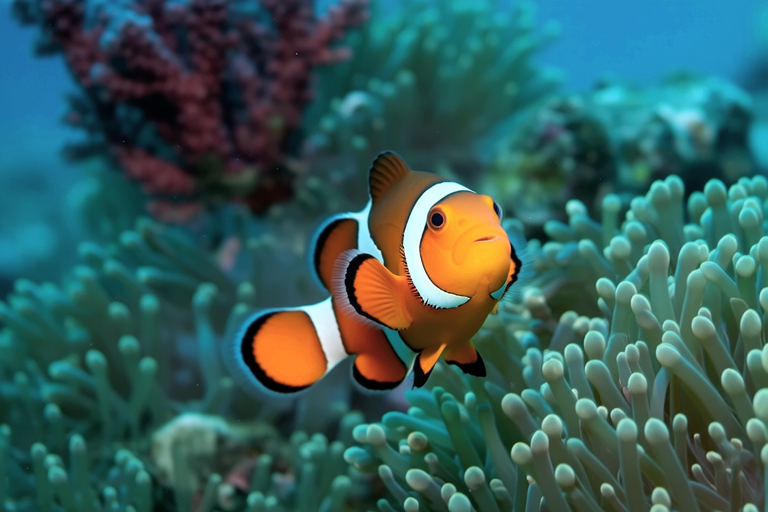
Top 10 Fascinating Facts About the Vibrant and Bold Clownfish
The clownfish, also known as anemonefish, is one of the most recognizable and beloved creatures in the marine world. These fish are not only strikingly beautiful but also possess a unique set of behaviors and adaptations that make them stand out among other marine species. From their vibrant coloration to their fascinating symbiotic relationship with sea anemones, there is much more to these bold fish than meets the eye. Let us dive into the top 10 fascinating facts about the vibrant and bold clownfish.
1. The Vibrant Coloration of Clownfish: Nature’s Artistry
Clownfish are renowned for their bright and striking color patterns, which range from vivid oranges and reds to more subdued yellows and blacks. This vibrant coloration serves multiple purposes. Firstly, it acts as a warning signal to potential predators, indicating that the fish might be toxic or unpalatable due to the presence of protective mucus layers on their skin. Secondly, these colors help in identifying different species within the same genus. Each species has its own distinct pattern, making it easier for scientists to classify and study them. Lastly, the colors play a role in communication within the group, aiding in mate recognition and social hierarchy.
2. Anemone Symbiosis: A Unique Partnership
One of the most captivating aspects of clownfish is their symbiotic relationship with sea anemones. Clownfish live among the tentacles of sea anemones, which provide protection from predators and offer shelter. In return, the clownfish help the anemone by driving away parasites, aerating the water around the anemone, and even providing nutrients through their waste. This mutualistic relationship is a prime example of how species can coexist and benefit from each other in the intricate web of marine life. Interestingly, the clownfish are immune to the anemone’s stinging cells, which they achieve by developing a protective mucus layer over time.
3. Behavioral Peculiarities: Social Structure and Hierarchy
Clownfish exhibit complex social structures within their groups. Typically, a single anemone will host a small harem of clownfish, led by a dominant breeding pair. The rest of the group consists of non-breeding individuals who assist in maintaining the colony. When the dominant female dies, the largest male undergoes a remarkable transformation, changing sex to become the new breeding female. This ability to change sex is known as sequential hermaphroditism, a rare trait that enhances the survival of the species by ensuring reproduction continues even if the breeding pair is lost. This behavior not only showcases the adaptability of clownfish but also highlights their resilience in the face of environmental challenges.
4. Evolutionary Adaptations: Surviving in Hostile Environments
Clownfish have evolved several remarkable adaptations that allow them to thrive in their challenging marine environment. Their ability to produce a protective mucus layer is crucial for avoiding the anemone’s lethal stings. Additionally, clownfish have developed specialized scales that reflect ultraviolet light, helping them blend in with the anemone’s coloration and avoid detection by predators. Furthermore, their highly efficient gills enable them to extract oxygen from the water more effectively, allowing them to survive in areas with lower oxygen levels. These adaptations underscore the evolutionary prowess of clownfish, making them well-suited to their niche in the reef ecosystem.
5. Reproduction and Parental Care: Dedicated Parents
Clownfish reproduction is a fascinating process that involves both the male and female in caring for their eggs. The female lays thousands of eggs, typically on the surface of rocks near the anemone. The male then takes over, meticulously guarding the eggs until they hatch. During this period, he fans the eggs to ensure they receive adequate oxygen and keeps them free from predators and fungi. Once the eggs hatch, the fry (young clownfish) remain close to the anemone for protection. This level of parental care is unusual among fish species and underscores the importance of family bonds in clownfish society.
6. Diversity Within the Species: Over 30 Species
There are over 30 recognized species of clownfish, each displaying unique characteristics and adaptations suited to their specific environments. Some species prefer shallow waters, while others thrive in deeper, more turbulent regions. Each species also exhibits variations in size, color, and behavior, reflecting the diverse ecological niches they occupy. For instance, the orange clownfish, commonly seen in aquariums, is the most widely recognized species. In contrast, the percula clownfish is smaller and more vibrantly colored, with white stripes. Understanding the diversity within the clownfish family provides valuable insights into the broader dynamics of marine ecosystems.
7. Clownfish and Climate Change: Navigating Environmental Challenges
Despite their adaptability, clownfish face significant threats due to climate change and human activities. Rising ocean temperatures and increased acidity pose serious risks to both clownfish and their anemone hosts. Warmer waters can cause coral bleaching, leading to the death of anemones and the loss of habitat for clownfish. Additionally, ocean acidification can impair the development of clownfish larvae, reducing their chances of survival. Conservation efforts are crucial to mitigate these impacts and ensure the survival of clownfish populations. Initiatives such as marine protected areas and sustainable fishing practices can help protect these vibrant creatures and their habitats.
8. Clownfish in Popular Culture: From the Reef to the Big Screen
Clownfish have captured the hearts of people worldwide, thanks in large part to their starring role in the animated film “Finding Nemo.” This movie has introduced millions of viewers to the wonders of clownfish and their underwater world. Beyond entertainment, “Finding Nemo” has sparked a renewed interest in marine conservation and the importance of protecting marine biodiversity. The film’s success has also contributed to increased awareness about the threats facing clownfish and their habitats, inspiring many to take action to support conservation efforts.
9. Scientific Research: Unveiling the Secrets of Clownfish Behavior
Scientists continue to uncover new insights into the behavior and biology of clownfish, shedding light on their complex interactions within their ecosystems. Recent studies have focused on understanding the chemical signals that enable clownfish to establish and maintain their symbiotic relationships with anemones. Other research explores the genetic basis of their coloration and the mechanisms behind their sex-changing abilities. These discoveries not only deepen our knowledge of clownfish but also provide valuable information that can be applied to other marine species and ecosystems.
10. Conservation Status: Protecting the Future of Clownfish
The International Union for Conservation of Nature (IUCN) currently lists most clownfish species as “least concern,” indicating that they are not at immediate risk of extinction. However, this does not mean that conservation efforts are unnecessary. Many factors, including habitat destruction and overfishing, continue to threaten clownfish populations. To ensure the long-term survival of these vibrant and bold fish, it is essential to implement and enforce effective conservation measures. These may include establishing marine reserves, regulating the aquarium trade, and promoting sustainable fishing practices. By working together, we can safeguard the future of clownfish and preserve the beauty and biodiversity of our oceans.
In conclusion, the vibrant and bold clownfish are not just a colorful addition to the marine world but also a testament to the wonders of evolution and adaptation. From their unique symbiotic relationships to their complex social structures, these fish offer a wealth of insights into the intricate balance of marine ecosystems. As we continue to explore and understand these fascinating creatures, it is crucial that we also work towards their conservation, ensuring that future generations can marvel at the splendor of clownfish in their natural habitats.
