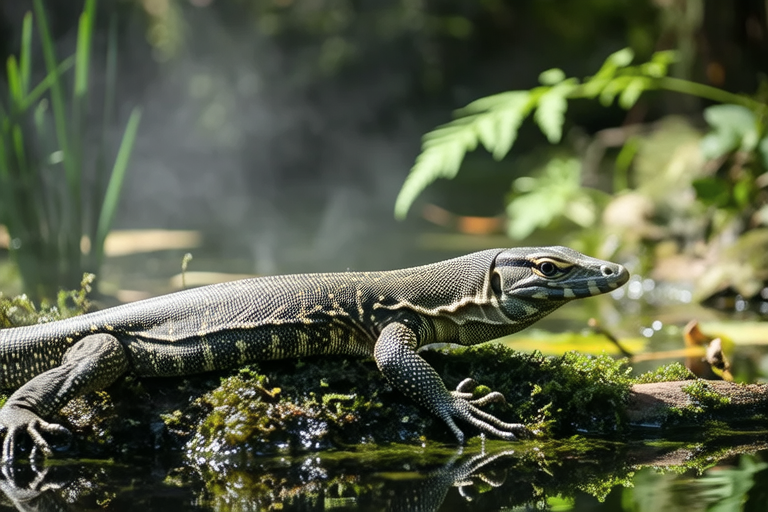
From Swamp to Home: Caring for Your Exotic Water Monitor Pet
Welcome to the fascinating world of water monitor pets! If you’re considering adopting a water monitor or already have one as a companion, you’ve come to the right place. This comprehensive guide will walk you through the essential aspects of caring for these remarkable reptiles, ensuring they thrive in their new home.
The Responsibility of Owning a Water Monitor
Owning a water monitor (Varanus salvator) is a significant commitment. These large, active lizards require specialized care, ample space, and a dedicated owner. Before bringing one into your home, consider the long-term commitment, the cost, and the impact on your lifestyle. Research thoroughly and ensure you’re prepared for the challenges that come with owning such a unique pet.
Habitat Setup
Water monitors need spacious enclosures that mimic their natural habitat. A 6x3x4 foot enclosure is a minimum for a full-grown adult, but larger is always better. The enclosure should have a deep water area for swimming, basking areas, and climbing structures. Use UVB lighting and a heat lamp to provide the necessary warmth and light. Substrate options include coconut fiber, cypress mulch, or a mixture of both, which helps maintain humidity levels between 70% and 80%. Ensure proper ventilation and regular cleaning to prevent bacterial growth.
Diet Requirements
Water monitors are omnivorous, feeding on a variety of insects, small mammals, fish, and fruits. Juveniles primarily eat insects like crickets, mealworms, and superworms, while adults can consume rodents, fish, and fruits. Feed juveniles daily, reducing frequency to every other day as they grow. Ensure all food items are appropriately sized for your monitor’s mouth and digestive tract. Gut-load insects with nutritious food before feeding them to your monitor for optimal nutrition.
Health Concerns
Regular veterinary check-ups are crucial for maintaining your water monitor’s health. Common health issues include metabolic bone disease from calcium deficiency, respiratory infections from improper temperature and humidity levels, and parasites. Signs of illness include lethargy, loss of appetite, abnormal shedding, and discharge from the nose or eyes. Early detection and treatment are key to preventing more serious conditions.
Behavioral Insights
Water monitors are intelligent and curious creatures. They are highly active during the day and enjoy exploring their environment. Provide plenty of enrichment activities, such as puzzle feeders and interactive toys, to keep them mentally stimulated. Social interaction varies; some monitors may tolerate handling, while others prefer minimal contact. Establish a routine for feeding and handling to help your monitor feel secure and comfortable in its surroundings.
Social Interaction
Water monitors are not typically social animals, but they can develop bonds with their handlers if handled gently and consistently. Approach your monitor slowly and calmly, allowing it time to become accustomed to your presence. Avoid sudden movements or loud noises, which can startle your pet. Always supervise interactions, especially with children, to ensure safety for both the monitor and those around it.
Exercise Needs
Water monitors are naturally active and need ample space to move around. In addition to providing a large enclosure, offer opportunities for swimming, climbing, and digging. Encourage exercise by placing obstacles in their enclosure, such as branches for climbing and tunnels for exploration. Regular exercise promotes overall health and well-being, helping to prevent obesity and related health issues.
Importance of Informed Decision-Making
Adopting a water monitor is a big decision that requires careful consideration. Research extensively about their care requirements, local regulations, and the availability of veterinary services specializing in reptiles. Consider the impact on your living situation, family dynamics, and financial resources. Ensure you have the necessary equipment, knowledge, and commitment before bringing a water monitor into your home.
Conclusion
Caring for a water monitor is a rewarding yet challenging endeavor. With the right knowledge and dedication, you can provide your pet with a healthy, happy life. Remember, owning a water monitor is a long-term commitment that requires ongoing attention and effort. By understanding their needs and providing appropriate care, you can ensure your water monitor thrives in its new home. Enjoy the journey of raising this magnificent creature!
