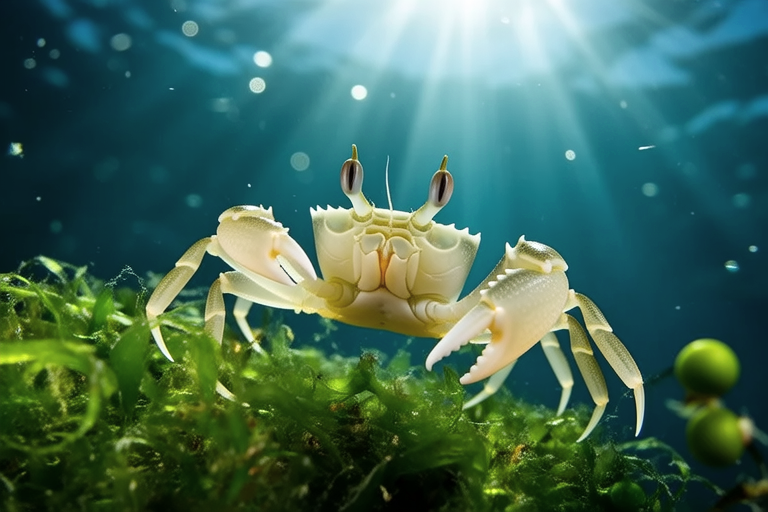
From Sea to Table: Discovering the Fascinating World of Pea Crabs
In the vast oceanic realm, where countless species coexist in intricate networks of life, one tiny inhabitant stands out for its remarkable adaptations and unique lifestyle: the pea crab. This diminutive crustacean, known scientifically as Pinnotheres, has captured the interest of marine biologists and ecologists alike due to its fascinating lifecycle, symbiotic relationships, and significant role within marine ecosystems. Let us dive into the world of pea crabs and explore what makes them such an integral part of our oceans.
The Unique Lifecycle of Pea Crabs
The lifecycle of pea crabs begins with the hatching of eggs from adult females. These eggs are carried under the mother’s abdomen until they hatch into free-swimming larvae. The larvae then undergo several stages of development before settling onto a host organism. Unlike many other crab species, pea crabs do not live independently but rather form symbiotic relationships with various marine animals, including sea cucumbers, bivalves, and sea stars. This dependency on hosts plays a crucial role in their survival and reproduction.
Symbiotic Relationships and Adaptations
Pea crabs have evolved to establish symbiotic relationships with several marine creatures, most notably sea cucumbers. These partnerships are mutually beneficial; while the pea crab gains protection and nutrients, its host benefits from improved mobility and defense against predators. For instance, when pea crabs reside inside sea cucumbers, they can help clean away parasites and debris, enhancing the health of their host. In return, the sea cucumber provides shelter and food for the growing crabs.
One of the most intriguing aspects of these symbiotic relationships is how well-adapted pea crabs are to living within their hosts. They possess flattened bodies that allow them to fit snugly inside the body cavities of sea cucumbers without causing discomfort. Additionally, their legs are modified for gripping onto internal tissues, ensuring they remain securely attached during movement.
Role in Marine Ecosystems
Pea crabs play a vital role in maintaining balance within marine ecosystems by acting as both scavengers and decomposers. By feeding on dead organic matter found within their hosts’ bodies, they contribute to nutrient cycling processes essential for sustaining healthy marine environments. Furthermore, their presence helps regulate populations of smaller organisms that might otherwise overpopulate if left unchecked.
However, despite their importance, pea crabs face threats from human activities such as pollution and habitat destruction. As coastal regions continue to develop, it becomes increasingly important to protect these delicate ecosystems and ensure the continued survival of all inhabitants, including our tiny friends – the pea crabs.
Historical Significance and Cultural Impact
Historically, pea crabs have been valued for more than just their ecological contributions. In some cultures, they hold symbolic meanings related to fertility and prosperity. For example, in certain Asian traditions, finding a pea crab inside a shellfish is considered lucky and brings good fortune to those who consume it. This belief has led to increased demand for products containing pea crabs, particularly in areas where seafood consumption is prevalent.
Culinary uses of pea crabs also extend beyond mere superstition. In Japan, for instance, there exists a delicacy called ‘kani no naka’, which translates literally to ‘crab inside’. This dish involves preparing bivalves (such as clams or oysters) that naturally harbor pea crabs. When cooked together, the flavors meld beautifully, creating a unique gastronomic experience cherished by many food enthusiasts.
Interesting Adaptations for Survival
To survive in their challenging environment, pea crabs have developed several remarkable adaptations. Their small size allows them to enter tight spaces within their hosts, making them less visible to potential predators. Moreover, their coloration often matches that of their surroundings, providing camouflage against threats. Another notable adaptation is their ability to withstand varying levels of salinity and temperature changes, enabling them to thrive across different regions of the world’s oceans.
Additionally, pea crabs exhibit behaviors designed to enhance their chances of survival. For example, when faced with danger, they may release a chemical signal that alerts nearby individuals about impending threats. This collective response mechanism helps protect entire communities from predation.
Conclusion
The world of pea crabs is full of wonder and complexity, offering valuable insights into the interconnectedness of marine life. From their unique lifecycles and symbiotic relationships to their important roles in maintaining ecosystem balance, these tiny creatures play a significant part in shaping the oceans we know today. As we continue to learn more about pea crabs and other lesser-known species, it becomes clear that every organism contributes uniquely towards the health and diversity of our planet’s aquatic environments.
Let us strive to appreciate and preserve these fragile ecosystems, ensuring future generations can enjoy the beauty and richness of our seas just as we do now. After all, protecting one species means safeguarding countless others, including the humble yet mighty pea crab.
