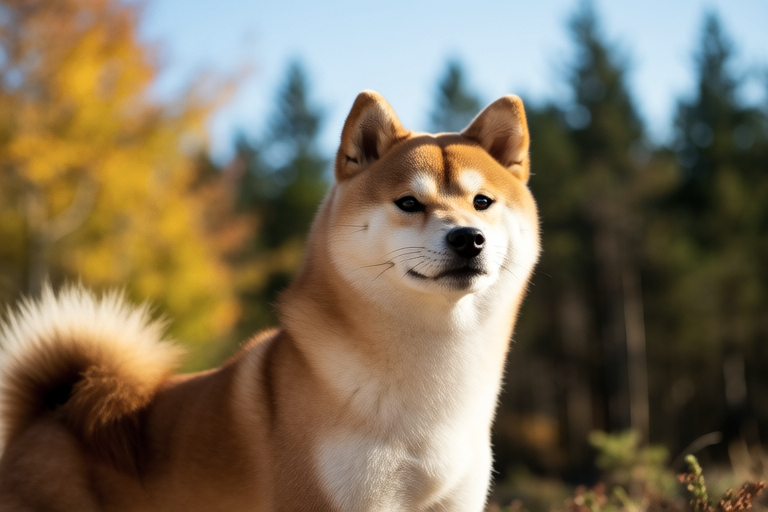
The Shiba Inu: A Blend of Wild Heritage and Wagging Loyalty
The Shiba Inu, one of the smallest and most ancient breeds of Japanese dogs, has captured the hearts of dog enthusiasts worldwide with its striking appearance, independent yet loyal nature, and a spirit that echoes its origins in the rugged landscapes of Japan. This breed’s history is deeply rooted in the wild, where it honed its hunting skills and developed a resilience that remains a hallmark of the breed today.
Origins in the Wild Rugged Landscapes of Japan
The Shiba Inu’s origins can be traced back over three thousand years to the mountainous regions of Japan, particularly in the prefectures of Shizuoka, Mie, and Gifu. These areas are characterized by dense forests, steep mountains, and harsh climates, providing the perfect environment for the development of a dog that was both agile and sturdy. The breed’s name, “Shiba,” means brushwood in Japanese, referring to the type of bushes and small trees common in these regions. The term also alludes to the reddish color of the Shiba Inu’s coat, which blends seamlessly with the natural surroundings.
The Shiba Inu was originally bred as a hunting dog, adept at flushing out birds and small game in the challenging terrain of the Japanese wilderness. Its keen sense of smell and sharp instincts made it invaluable to hunters, who relied on the breed’s ability to track and retrieve prey with precision. Over time, the Shiba Inu became a symbol of the Japanese countryside, embodying the spirit of the land and the people who lived there.
Independent Yet Loyal Nature
One of the most distinctive aspects of the Shiba Inu is its independent nature. Despite being a domesticated breed, the Shiba Inu retains a strong sense of self-reliance, often displaying an air of aloofness that sets it apart from other dog breeds. This independence is not a sign of disloyalty but rather a reflection of the breed’s deep-rooted instincts. Shibas are known for their loyalty to their immediate family, forming strong bonds with their owners while maintaining a certain level of autonomy.
This unique combination of independence and loyalty makes the Shiba Inu a fascinating companion. Owners often describe their Shibas as having a “cat-like” personality, with a tendency to observe and interact with their environment on their own terms. However, once bonded, Shibas are fiercely protective and devoted to their families, making them excellent watchdogs and companions.
Sharp Instincts and Physical Traits
The Shiba Inu’s physical characteristics are a testament to its wild heritage. With its compact build, thick double coat, and expressive face, the Shiba Inu is a striking sight. The breed’s small size, typically ranging from 33 to 38 cm (13 to 15 inches) at the shoulder, belies its strength and agility. The double coat, consisting of a soft undercoat and a coarse outer coat, provides insulation against the cold and protection from the elements, essential qualities for a dog that thrived in the rugged conditions of Japan.
The Shiba Inu’s sharp instincts are evident in its behavior and physical traits. Its keen senses, particularly its hearing and sense of smell, make it an excellent tracker. The breed’s triangular ears, set high on its head, enhance its hearing, allowing it to detect sounds from great distances. Similarly, its almond-shaped eyes, which can range in color from dark brown to amber, provide excellent peripheral vision, enabling the Shiba Inu to spot potential threats or prey with ease.
Resilience and Adaptability
Studies and anecdotes have highlighted the Shiba Inu’s remarkable resilience and adaptability. One notable example comes from the aftermath of the 1945 atomic bombings in Hiroshima and Nagasaki. Despite the devastation, a small population of Shiba Inus survived, demonstrating the breed’s tenacity and ability to endure extreme conditions. This resilience is a direct result of the Shiba Inu’s wild heritage, where survival often depended on quick thinking and resourcefulness.
In addition to their physical resilience, Shibas have shown remarkable adaptability to various environments. While traditionally associated with rural settings, Shibas have successfully transitioned to urban and suburban life, thriving in diverse living conditions. Their adaptability is further evidenced by their popularity in countries outside Japan, where they have become cherished pets in homes across the globe.
The Unique Bond Between Shibas and Their Owners
The bond between a Shiba Inu and its owner is a unique and special relationship, born out of the breed’s wild heritage and wagging loyalty. Shibas are known for their playful and affectionate nature, often engaging in lively games and displays of affection. However, this bond is built on mutual respect and understanding, with Shibas responding best to positive reinforcement and gentle guidance.
The Shiba Inu’s wild spirit is a constant reminder of its origins, and this untamed quality is what many owners find most endearing about the breed. While Shibas may not always be the most obedient dogs, their loyalty and devotion are unwavering. They form deep connections with their owners, becoming integral members of the family.
In conclusion, the Shiba Inu is a breed that embodies the essence of its wild heritage while remaining a beloved and loyal companion. Its striking appearance, independent yet loyal nature, and sharp instincts are a testament to its origins in the rugged landscapes of Japan. Despite centuries of domestication, the Shiba Inu retains an untamed spirit, reflected in its behaviors and physical traits. The unique bond formed between Shibas and their owners celebrates this blend of wild heritage and wagging loyalty, making the Shiba Inu a truly exceptional breed.
