Ultimate Guide: Feeding Your Bearded Dragon Like a Pro
Welcome to your ultimate guide on how to feed your bearded dragon like a pro! Proper nutrition is crucial for the health and longevity of these delightful reptiles. This guide will walk you through everything you need to know about feeding your bearded dragon, from essential dietary requirements to hydration tips and common feeding mistakes to avoid.
Essential Dietary Requirements
Bearded dragons require a balanced diet that includes a variety of vegetables, fruits, and proteins. Their diet should consist of approximately 80% plant matter and 20% protein. The exact proportions may vary depending on the age and size of your dragon, but this general guideline will help ensure they receive the nutrients they need.
Portion Sizes and Frequency Based on Age and Size
Newborn and juvenile bearded dragons (under 6 months) should be fed daily with small portions of food, as their digestive systems are still developing. As they grow, you can increase the amount of food and reduce the frequency of feeding to every other day. Adult bearded dragons (over 1 year) should be fed every other day with larger portions.
Types of Vegetables Suitable for Bearded Dragons
Vegetables form the bulk of a bearded dragon’s diet. Some excellent choices include collard greens, mustard greens, dandelion greens, endive, escarole, and turnip greens. Avoid feeding them iceberg lettuce, as it has little nutritional value and can cause diarrhea.
Fruits Suitable for Bearded Dragons
Fruits should be offered sparingly, as they are high in sugar. Appropriate fruits include blueberries, raspberries, strawberries, and mangoes. Feed fruit no more than once a week and in small quantities.
Proteins Suitable for Bearded Dragons
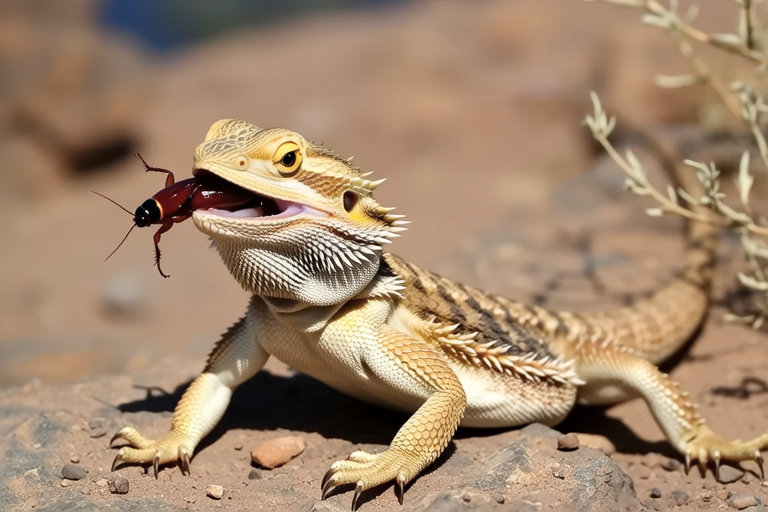
Protein sources should be lean and varied. Good options include crickets, dubia roaches, mealworms, and superworms. Ensure that the insects are gut-loaded with nutritious foods before offering them to your dragon.
Calcium and Vitamin D3 Supplementation
Calcium and vitamin D3 are essential for maintaining strong bones and preventing metabolic bone disease. Dust your dragon’s food with a calcium supplement twice a week and a multivitamin containing vitamin D3 once a week. Be cautious not to over-supplement, as excessive amounts of vitamin D3 can lead to toxicity.
Hydration Tips
Bearded dragons obtain most of their hydration from the food they eat, but you should also provide fresh water daily. Use a shallow dish that allows them to easily drink and soak if needed. Mist the enclosure occasionally to increase humidity and encourage drinking.
Common Feeding Mistakes to Avoid
Avoid overfeeding your bearded dragon, as obesity can lead to various health issues. Also, refrain from feeding them wild-caught insects, which may carry parasites or pesticides. Additionally, do not offer them toxic plants or foods that are harmful to reptiles.
Signs of Malnutrition or Overfeeding
Signs of malnutrition include lethargy, loss of appetite, and softening of the jaw or limbs. Overfeeding can result in obesity, difficulty moving, and fatty liver disease. Regular veterinary check-ups can help catch these issues early.
Advice on Transitioning to New Foods
Introduce new foods gradually to allow your bearded dragon to adjust. Start by mixing a small amount of the new food with their regular diet and gradually increase the proportion over several days. Monitor their reaction and consult a veterinarian if they show any signs of distress.
Conclusion
Feeding your bearded dragon properly is key to their health and happiness. By following the guidelines outlined in this ultimate guide, you can ensure your dragon receives the balanced diet they need to thrive. Remember to stay informed about the latest research and consult with a veterinarian if you have any concerns about your dragon’s health or diet.
