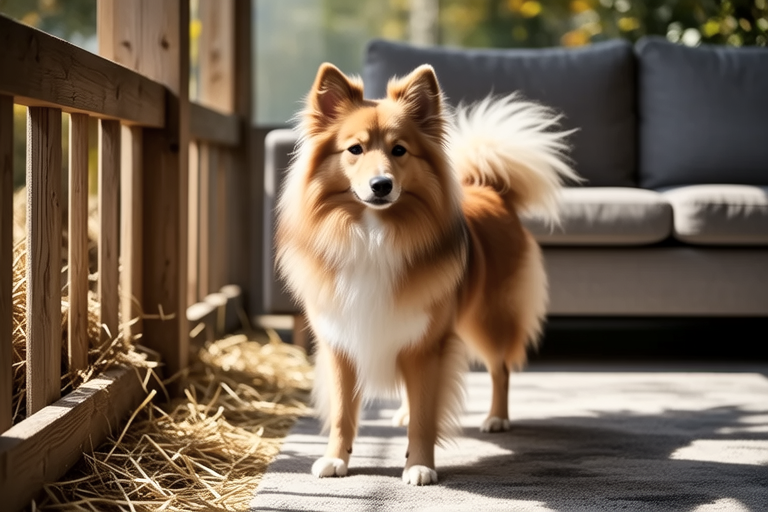
From Farmyard to Couch Potato: Evolution of the Norwegian Buhund
The Norwegian Buhund, a versatile and intelligent breed, has a rich history deeply rooted in the rugged landscapes of Norway. Originally bred for herding and guarding livestock, this breed has undergone significant transformations over the centuries. From its humble beginnings in the farmyard to its current status as a beloved companion, the Norwegian Buhund’s journey is a testament to adaptability and resilience.
Origins in the Farmyard
The Norwegian Buhund, also known as the Norsk Buhund, traces its lineage back to ancient times when it was indispensable on Norwegian farms. These dogs were primarily used for herding sheep and goats, tasks that required intelligence, agility, and stamina. The breed’s name, “Buhund,” is derived from the Norwegian word “bu,” meaning farm or homestead, and “hund,” meaning dog. Thus, the term “Norwegian Buhund” literally translates to “farm dog.” Their initial roles were not limited to herding; they also served as loyal guardians, protecting the farmstead and its inhabitants from potential threats.
The Norwegian Buhund’s physical attributes were well-suited to its demanding duties. They are medium-sized dogs, typically weighing between 20 and 40 pounds, with a sturdy build that allowed them to withstand harsh weather conditions. Their double coat provided insulation against the cold, and their sharp senses made them excellent at detecting any unusual activity. Additionally, their high energy levels and alertness were crucial for keeping flocks safe and ensuring the smooth operation of the farm.
The Transition Over Time
As agricultural practices evolved and rural populations began to shift towards more urban centers, the role of the Norwegian Buhund changed dramatically. The mechanization of farming reduced the need for herding dogs, leading to a decline in the breed’s traditional duties. This period marked a significant transition for the Norwegian Buhund, as it shifted from being an essential farm tool to a cherished family pet.
Breeding practices also underwent substantial changes during this period. Selective breeding focused more on temperament and appearance, aiming to produce dogs that were not only friendly but also attractive to potential owners. This shift led to the development of the modern Norwegian Buhund, which retains much of its original intelligence and energy but has become more adaptable to various living conditions.
Influence on Physical Attributes and Temperament
The evolution of the Norwegian Buhund has had noticeable effects on both its physical attributes and temperament. While still robust and agile, today’s Norwegian Buhunds tend to be slightly smaller than their ancestors, reflecting the changing needs of their handlers. Their coats remain thick and dense, providing protection against varying climates, though some variation in coat length and texture can be observed due to selective breeding.
Temperament-wise, the Norwegian Buhund remains highly intelligent and eager to please, traits that have been preserved through generations. However, their natural inclination towards activity has been somewhat tempered, making them better suited for indoor living. This adjustment in temperament does not mean they have lost their drive; rather, they now channel their energy into play and interactive activities within the home. Their loyalty and protective nature continue to shine through, making them excellent companions and guardians.
Current Status as a Companion Animal
Today, the Norwegian Buhund is primarily found in urban settings, where it thrives as a beloved family member. Its adaptability to city life is one of its most remarkable qualities. Despite its heritage as a working farm dog, the Norwegian Buhund has seamlessly transitioned into the role of a couch potato, enjoying the comforts of home while still maintaining its innate desire for interaction and stimulation.
Living in cities presents unique challenges for many dog breeds, but the Norwegian Buhund’s even-tempered disposition and affectionate nature make it well-suited for apartment living. Regular walks and play sessions are necessary to keep them mentally and physically stimulated, preventing boredom that could lead to destructive behaviors. Their intelligence also means they are quick learners, responding well to positive reinforcement training methods.
One of the most endearing aspects of the Norwegian Buhund is its ability to bond closely with its human family. They form strong attachments and are often described as being very “people-oriented.” This trait makes them ideal companions for individuals seeking a loving and devoted partner. Whether lounging on the couch or participating in outdoor activities, the Norwegian Buhund brings joy and companionship to those lucky enough to share their lives.
Conclusion
The journey of the Norwegian Buhund from the bustling farmyard to the cozy confines of urban living is a story of adaptation and transformation. Originally bred for herding and protection, this breed has evolved into a cherished companion known for its intelligence, loyalty, and adaptability. While the demands of modern life have shifted, the Norwegian Buhund continues to thrive, bringing warmth and companionship to homes around the world. As a couch potato, it may have traded its rugged working life for a more relaxed lifestyle, but its spirit and zest for life remain undiminished, ensuring it will continue to capture hearts for generations to come.
