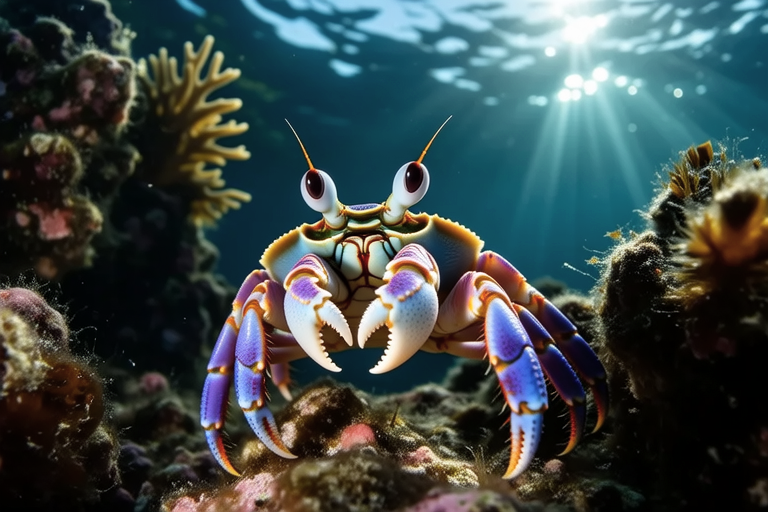
Hermit Crabs: Underwater Explorers
Hermit crabs are fascinating creatures that have captured the imagination of marine enthusiasts for centuries. These small crustaceans are known for their unique behaviors and habitats, making them stand out among other sea creatures. Their role as underwater explorers is crucial in maintaining the balance of marine ecosystems. In this article, we will delve into the intriguing world of hermit crabs, exploring their shell-changing habits, social interactions, and survival strategies in diverse marine environments. We’ll also discuss their communication methods, dietary preferences, and the challenges they face in changing climates.
Shell-Changing Habits
One of the most distinctive features of hermit crabs is their habit of living in discarded shells. These shells provide protection from predators and environmental hazards. Hermit crabs are highly selective when choosing a new home, ensuring that the shell fits perfectly to accommodate their growing bodies. They often engage in lively competitions with other hermit crabs over desirable shells, leading to interesting social dynamics within their communities.
As hermit crabs grow, they must periodically find larger shells to inhabit. This process can be both challenging and exciting for these resourceful creatures. When a hermit crab outgrows its current shell, it ventures out into the open, exposing itself to potential threats. The crab carefully examines various shells until it finds one that meets its criteria. Once a suitable shell is found, the hermit crab quickly moves in, ensuring its safety and comfort.
Social Interactions
Despite their solitary nature, hermit crabs exhibit complex social behaviors. They often gather in large groups, especially during mating season or when searching for food. These gatherings offer opportunities for communication and cooperation. Hermit crabs use chemical signals and vibrations to communicate with each other, helping them coordinate activities such as finding food or avoiding danger.
Hermit crabs also display altruistic behavior towards their fellow species members. For example, if a hermit crab loses its shell due to injury or predation, others may offer assistance by providing a spare shell. This cooperative behavior strengthens their community bonds and increases their chances of survival.
Survival Strategies
Hermit crabs employ various survival strategies to thrive in diverse marine environments. Their ability to adapt to different habitats is remarkable, ranging from shallow coastal waters to deep-sea trenches. Some species even venture into freshwater environments, showcasing their versatility.
To protect themselves from predators, hermit crabs rely on their shells as armor. They also utilize camouflage techniques, blending in with their surroundings to avoid detection. Additionally, hermit crabs have developed strong claws, which they use for defense or to capture prey. Their agility and speed further enhance their chances of escaping danger.
Communication Methods
Hermit crabs communicate through a combination of chemical signals, vibrations, and visual cues. Chemical signals play a significant role in attracting mates and warning others of potential threats. Vibrations help hermit crabs detect nearby organisms, allowing them to react swiftly to changes in their environment. Visual cues, such as body postures and movements, facilitate coordination during group activities.
Dietary Preferences
Hermit crabs are omnivorous, feeding on a variety of organic matter including algae, detritus, and small marine animals. Their diet contributes to nutrient cycling within marine ecosystems, playing a vital role in maintaining ecological balance. By consuming decaying plant and animal material, hermit crabs prevent the accumulation of harmful substances and promote healthy growth of other marine organisms.
Challenges in Changing Climates
The ongoing climate crisis poses significant challenges for hermit crabs. Rising sea temperatures and ocean acidification affect their ability to build and maintain their protective shells. As carbon dioxide levels increase, the acidity of seawater rises, making it more difficult for hermit crabs to extract calcium carbonate necessary for shell formation. This can lead to weaker shells, increasing vulnerability to predators and environmental hazards.
In addition to these physical challenges, climate change alters the distribution and availability of food sources. Changes in water temperature and currents impact the abundance and location of algae and other organisms that form part of hermit crabs’ diet. Consequently, hermit crabs may need to travel greater distances to find sufficient nourishment, expending valuable energy reserves.
Lifecycle and Marine Ecosystem Contributions
The lifecycle of hermit crabs begins with eggs laid by female crabs in shallow waters. After hatching, larvae enter the planktonic stage, drifting through the water column before settling on the seafloor as juveniles. As they mature, hermit crabs undergo several molting stages, gradually growing larger and stronger.
Hermit crabs play a crucial role in marine ecosystems by facilitating nutrient recycling and promoting biodiversity. By scavenging on dead organic matter, they contribute to the breakdown of complex compounds into simpler forms, enriching the surrounding environment. This process supports the growth of other marine organisms and enhances overall ecosystem health.
Conclusion
Hermit crabs are truly remarkable creatures, embodying resilience and adaptability in the face of ever-changing marine environments. Their unique shell-changing habits, social interactions, and survival strategies make them invaluable contributors to underwater ecosystems. Understanding the challenges they face in changing climates is essential for effective conservation efforts. By raising awareness about hermit crabs and their importance, we can work together to protect these fascinating creatures and ensure the continued health of our oceans.
